You asked the school for more help, and someone told you a 504 plan is enough. Now you're wondering if that's actually true, and whether you're allowed to push for anything else.
Here's the short answer: you can ask for a full evaluation in writing at any time, even if your child already has a 504 plan. You don't need the school's permission to ask, and an existing 504 plan doesn't take that right away.
Let me walk you through what these two things actually are, so you can decide what fits your child.
What a 504 plan and an IEP actually are
A 504 plan comes from a civil rights law. It gives your child accommodations: changes to how the school day works so your child can access learning. Think extra time on tests, a seat near the front, permission to check blood sugar, or a break when symptoms flare. A 504 plan changes the conditions around your child. It does not add specialized teaching.
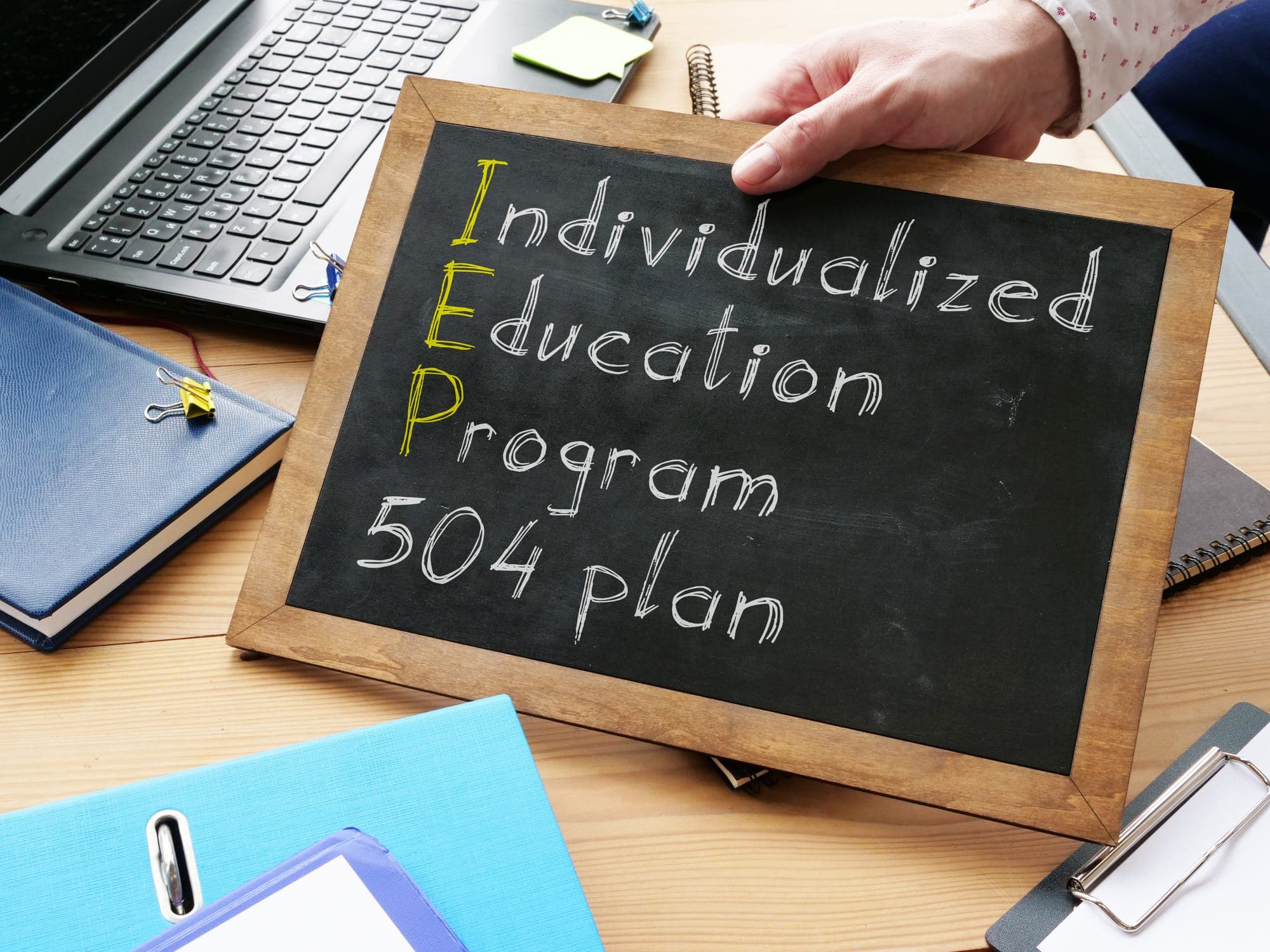
An Individualized Education Program (IEP) comes from a different federal law, the Individuals with Disabilities Education Act (IDEA). An IEP can include accommodations too, but it also provides something a 504 plan can't: specialized instruction and related services. That means teaching designed for your child's specific needs, plus services like speech therapy, occupational therapy, or counseling written into a plan with goals the school has to track.
So the real difference is this. A 504 plan adjusts the environment. An IEP adds instruction and services on top of that. Neither one is automatically the right answer. The point of an evaluation is to find out which one fits.
Your child's health condition can qualify under IDEA
A lot of parents are told their child "just has a health issue," not a disability, so an IEP is off the table. That's worth a closer look.
IDEA includes a category called Other Health Impairment (OHI). Under the federal rule, it means having limited strength, vitality, or alertness because of a chronic or acute health problem, when that adversely affects a child's educational performance (34 CFR 300.8(c)(9)). Conditions like ADHD, epilepsy, asthma, diabetes, and heart conditions can fall here when they affect how your child learns.
Qualifying isn't automatic. It depends on the evaluation. But a health condition doesn't rule your child out, and it's often the exact door in.
You can request an evaluation at any time
You have the right to ask, in writing, for a free evaluation to see if your child qualifies for special education services. You can do this even with a 504 plan already in place (34 CFR 300.301, 300.503). The request starts a formal process the school has to respond to.
Once the school gets your consent to evaluate, federal law generally expects the evaluation to be completed within 60 days, unless your state has set its own timeline. Either way, the request puts a clock on it.
The Center for Parent Information and Resources, funded by the U.S. Department of Education, publishes a plain-language guide and a model request letter you can adapt (how to request an evaluation).
A 504 plan or "we're still trying interventions" is not a reason to say no
Here's one that trips up a lot of families. Sometimes a school says it can't evaluate yet because your child already has a 504 plan, or because they're still running a support program first. You may hear it called Response to Intervention (RTI) or Multi-Tiered System of Supports (MTSS). These are step-by-step support programs schools use before, or instead of, an evaluation.
Those programs can be helpful. But federal guidance is clear that a school can't use RTI, an MTSS process, or an existing 504 plan to delay or deny an evaluation once you've asked (OSEP Memo 11-07). Asking for an evaluation and running interventions can happen at the same time. One doesn't cancel the other.
This isn't about a school doing something wrong. It's about holding the process to what the law already requires.
Two more rights worth knowing
Least restrictive environment. If your child qualifies for an IEP, services are meant to be delivered in the least restrictive environment appropriate for your child (34 CFR 300.114). In plain terms, an IEP is built to keep your child learning alongside classmates as much as their needs allow, with support brought to them where possible.
Discipline protections. If your child has a disability under IDEA and behavior is tied to that disability, certain discipline protections stay attached to your child (34 CFR 300.530(e)). This can matter when a behavior is linked to a health condition, like a blood-sugar crash or a seizure aura, rather than a choice.
Frequently asked questions
If my child already has a 504 plan, can I still ask for an IEP evaluation? Yes. A 504 plan doesn't cancel your right to request an evaluation. You can ask in writing at any time, and the school has to respond (34 CFR 300.301, 300.503). Your next step is to send that written request and keep a dated copy.
Is an IEP better than a 504 plan? Not automatically. They do different jobs. A 504 plan provides accommodations. An IEP provides specialized instruction and services on top of accommodations. The evaluation is what tells you which one actually fits your child.
Does a health condition count as a disability at school? It can. IDEA's Other Health Impairment category covers chronic or acute health problems that affect a child's learning (34 CFR 300.8(c)(9)). Whether your child qualifies depends on the evaluation, so the way to find out is to request one.
What if the school says they need to try interventions first? Interventions and an evaluation can run at the same time. A school can't use RTI, MTSS, or a 504 plan to delay your evaluation once you've requested it (OSEP Memo 11-07). Put your request in writing and note the date.
Next step
You don't need to win an argument to get an evaluation. You just need to ask in writing and start the clock. Here's a template line you can send today:
"I am requesting a full special education evaluation for my child, [name], under IDEA. Please send me the consent forms and let me know the timeline. I am making this request in writing on [date]."
If a meeting is coming and you'd rather not walk in alone, Turnout is an education advocate that prepares with you beforehand and joins IEP meetings to push for what the law requires. You stay the parent who knows your child. We handle the part where the process gets technical.
You didn't do anything wrong by asking for more. Your next step is still ahead of you.